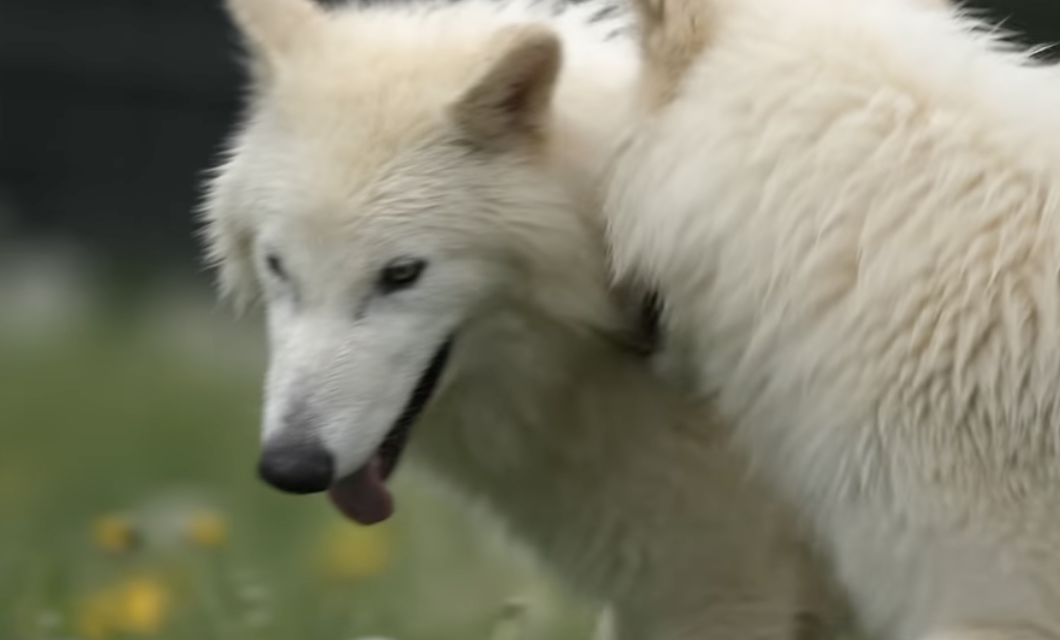
Romulus and Remus are two male dire wolves (along with a younger female named Khaleesi) created by Colossal Biosciences, a biotechnology company specializing in de-extinction efforts. Born on October 1, 2024, they are presented as the world’s first successfully “de-extinct” animals, marking a major milestone in genetic engineering.
Dire Wolf siblings, Romulus and Remus, howling. The first time for the species in over 10,000 years 🐺 pic.twitter.com/ilV9nNO0Qj
— westerosies (@westerosies) April 7, 2025
Background and Creation
The dire wolf (Aenocyon dirus) was a real Pleistocene-era predator that went extinct around 10,000–13,000 years ago. It was larger and more robust than modern gray wolves, with stronger jaws adapted for hunting megafauna.
Colossal used ancient DNA from a 13,000-year-old tooth and a 72,000-year-old skull to reconstruct parts of the dire wolf genome. They then applied CRISPR gene-editing to make approximately 20 precise edits across 14 genes in gray wolf (Canis lupus) cells, aiming to recreate key dire wolf traits like:
- Larger size
- Wider heads
- Powerful jaws
- White coats
- Muscular builds
These edited cells were used to create embryos, implanted into surrogate domestic dogs (large hound mixes), and the pups were born via cesarean section.
Current Status (as of late 2025)
Romulus and Remus are now over a year old, weighing more than 120–140 pounds each (significantly larger than typical gray wolves of the same age). They exhibit wild behaviors, such as:
- Keeping distance from humans
- Retreating when approached
- Distinctive howls described as the “first dire wolf howl in over 10,000 years”
They live with Khaleesi (born January 30, 2025) as a small pack in a secure, undisclosed 2,000-acre ecological preserve in the northern United States, enclosed by high fencing for safety and monitoring. The facility includes veterinary care and is designed to mimic natural conditions while ensuring containment.
Naming and Cultural Ties
The names Romulus and Remus are a deliberate nod to the Roman mythological twins raised by a she-wolf, who founded Rome—fitting for wolves with such legendary connotations. Khaleesi references the Game of Thrones character (dire wolves featured prominently in the series), and author George R.R. Martin has been involved as an investor and advisor.
Controversy
While Colossal calls them dire wolves and celebrates them as de-extinct, many scientists argue they are genetically modified gray wolves with only a tiny fraction of edits (gray wolf genomes have billions of base pairs). True de-extinction would require a fully identical genome, which isn’t possible yet with degraded ancient DNA. Critics view this as more of a “proxy” or phenotypically similar animal rather than a revived species.
🚨 No, the dire wolf has not been brought back from extinction
— Curiosity (@MAstronomers) April 8, 2025
Colossal Biosciences claims three pups born recently are dire wolves, but they are actually grey wolves with genetic edits intended to make them resemble the lost species. pic.twitter.com/lTu9nn1sbU
Regardless, Romulus and Remus represent a groundbreaking proof-of-concept in biotechnology, sparking debates about ethics, conservation, and restoring lost biodiversity. And the cubs are cute af.